South Africa sealed the four-Test "Rugby's Greatest Rivalry" series with a 43-28 victory over New Zealand at a sold-out M&T Bank Stadium in Baltimore on Saturday, completing a dominant 3-1 series triumph that underlined their status as the preeminent force in international rugby.
The result, achieved before a record rugby crowd of more than 68,000, marked Rassie Erasmus's 100th Test in charge of the Springboks — a milestone celebrated in the most emphatic fashion. Four weeks after losing 33-16 at Ellis Park in the series opener, South Africa rattled off three consecutive wins to claim the silverware in emphatic fashion.
A Second-Half Onslaught
New Zealand, who had won the opening Test convincingly in Johannesburg, threatened to extend the contest into a decider when Codie Taylor finished after 32 phases of sustained pressure to hand the visitors a 14-10 lead. Richie Mo'unga's conversion — his first Test points in nearly three years — added to the sense that the All Blacks had found their groove after a bruising three weeks.
But South Africa's response was devastating. Damian de Allende, who had already crossed in the first half, completed his brace early in the second period before Pieter-Steph du Toit added a third. The Springboks' forward pack, which had gradually asserted control throughout the series, overwhelmed New Zealand at the set piece and in the collision zone, creating the platform for a relentless onslaught.
Ethan Blackadder pulled one back for the All Blacks, but Kurt-Lee Arendse and Cameron Hanekom extended the lead with late tries that put the result beyond doubt. Beauden Barrett had the final say with a consolation, but the damage had long been done.
Van den Berg the Conductor
Scrum-half Morne van den Berg was named player of the match, and it was no surprise. His service from the base of the ruck was sharp, his game management composed, and his ability to create space for fly-half Sacha Feinberg-Mngomezulu a constant feature of the Springboks' second-half control. Van den Berg also crossed for one of South Africa's six tries, capping a performance that confirmed his status as one of the most improved players in world rugby.
Feinberg-Mngomezulu, who opened the scoring with the boot, was equally influential. The young fly-half grew into the match as the Springboks' dominance at the breakdown gave him time and space to dictate proceedings. His kicking from hand and tee kept the All Blacks pinned deep in their own half for long stretches.
A Series Defined by Forward Power
The series as a whole was defined by South Africa's forward dominance against New Zealand's attacking enterprise — a dynamic that played out to the same conclusion across all four matches. After losing the opener, Erasmus made a series of adjustments to his pack that paid dividends. The scrum, which had been under pressure in Johannesburg, became a weapon. The lineout, marshalled by the veteran Eben Etzebeth, functioned with metronomic efficiency. And at the breakdown, Du Toit and the loose forward trio consistently disrupted New Zealand's rhythm.
For the All Blacks, the series exposed the gap between their attacking potential and their ability to sustain pressure against the Springboks' physicality. Dave Rennie's side showed flashes of brilliance — Taylor's try from 32 phases was a masterclass in patience — but too often they were unable to convert territory into points when the Springboks' defence tightened.
A Milestone Match in American Rugby
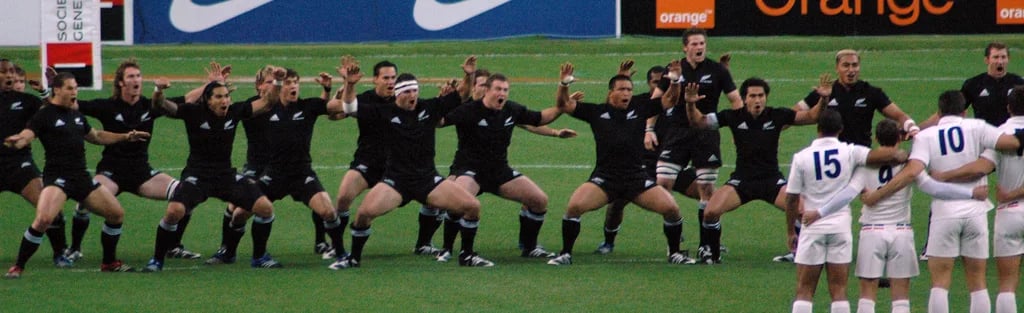
The Baltimore Test was more than a series finale. Played at the home of the NFL's Baltimore Ravens, it represented the latest push by World Rugby to expand the sport's footprint in the United States ahead of the 2031 Rugby World Cup. The crowd of 68,000-plus set a new attendance record for a rugby match in the U.S., and the atmosphere inside M&T Bank Stadium was electric from the opening haka.
Former All Blacks flanker Jerome Kaino, who served as an ambassador for the series, spoke earlier in the week about the significance of bringing the rivalry to American soil. "There's a huge history between the All Blacks and the Springboks," Kaino said. "Every time we play each other, it's never an easy game, so it's pretty cool to be able to bring it here to the U.S."
The fans responded. Among them were die-hard supporters who had traveled from South Africa and New Zealand, casual American sports fans drawn by the spectacle, and a couple celebrating their 30th wedding anniversary. The universal verdict was the same: rugby's showcase had delivered.
What It Means Going Forward
South Africa now turn their attention to the Nations Championship, where they will look to build on this series success. The Springboks' depth was a defining feature of the Baltimore triumph — Erasmus rotated his squad throughout the series without any discernible drop in performance — and that depth positions them well for a packed international calendar.
For New Zealand, the series defeat raises questions about their ability to match the Springboks' physicality in the biggest matches. The All Blacks remain a dangerous attacking side, but three consecutive defeats will sting. The two teams are likely to meet again at the 2027 Rugby World Cup in Australia, where the stakes will be even higher.
For now, the Springboks celebrate. A 43-28 victory, a 3-1 series win, and a record crowd in Baltimore. Erasmus's 100th Test could not have been scripted better.
Sources
- https://www.skysports.com/rugby-union/news/12321/13584821/south-africa-vs-new-zealand-springboks-show-steel-to-secure-43-28-victory-and-3-1-series-win-against-all-blacks
- https://springboks.rugby/news-features/articles/2026/9/13/brilliant-boks-seal-the-deal-in-baltimore
- https://www.bbc.com/sport/rugby-union/articles/c07lmxpmvr9o